Paint Matching in San Diego, CA
A repaired bumper, door, fender, hood, or panel should blend with the rest of your vehicle.
When paint work is needed after a scratch, bumper repair, dent repair, or body repair, the new finish must be matched to the vehicle’s current paint. That is where paint matching in San Diego, CA matters.
CollisionFix helps drivers with car paint color matching, paint code review, bumper paint match, panel blending, clear coat finish, and refinishing after body or paint repair.
Paint matching is not just choosing a color from a chart. Sun, age, weather, washing, previous repairs, and panel material can all change how paint looks. Our goal is to help the repaired area blend with the vehicle as closely as possible.
Car Paint Color Matching in San Diego
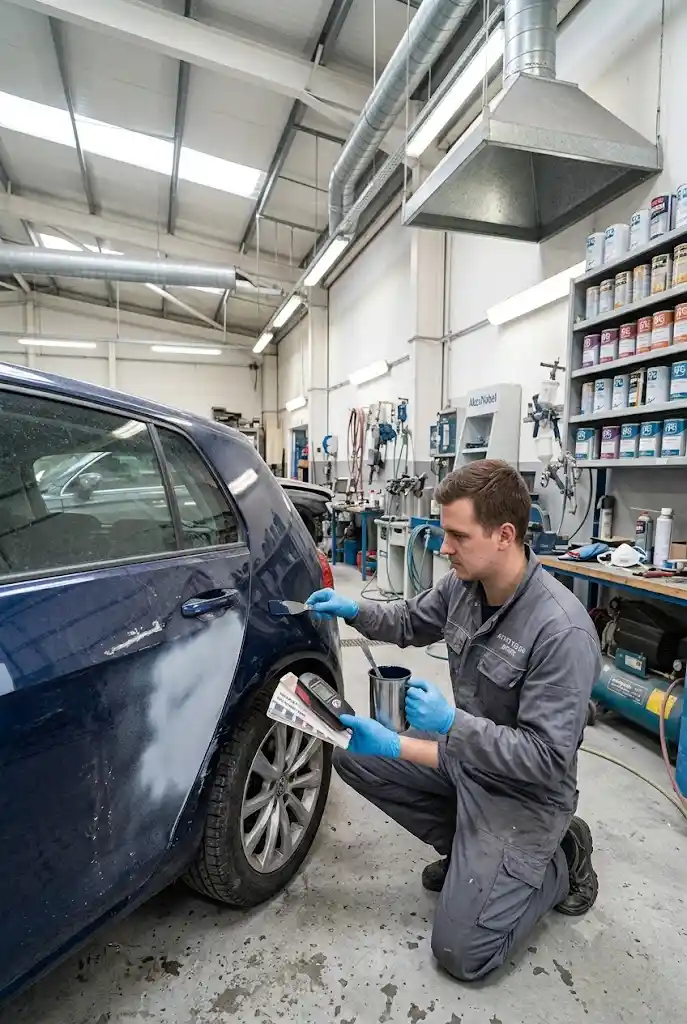
Car paint color matching in San Diego starts with the original paint information, but the real test is how the color looks on your vehicle today.
The paint code gives the factory color family. The current finish shows how that color has changed over time.
CollisionFix helps with paint matching for:
- paint code review
- color blending
- panel blending
- bumper paint match
- repaired panel refinishing
- clear coat finish
- factory color reference
- paint repair after scratches
- paint repair after bumper damage
- paint repair after body work
A good-looking repair depends on the color, paint age, clear coat condition, panel location, material, and lighting.
Paint Store Match vs. Auto Body Paint Matching
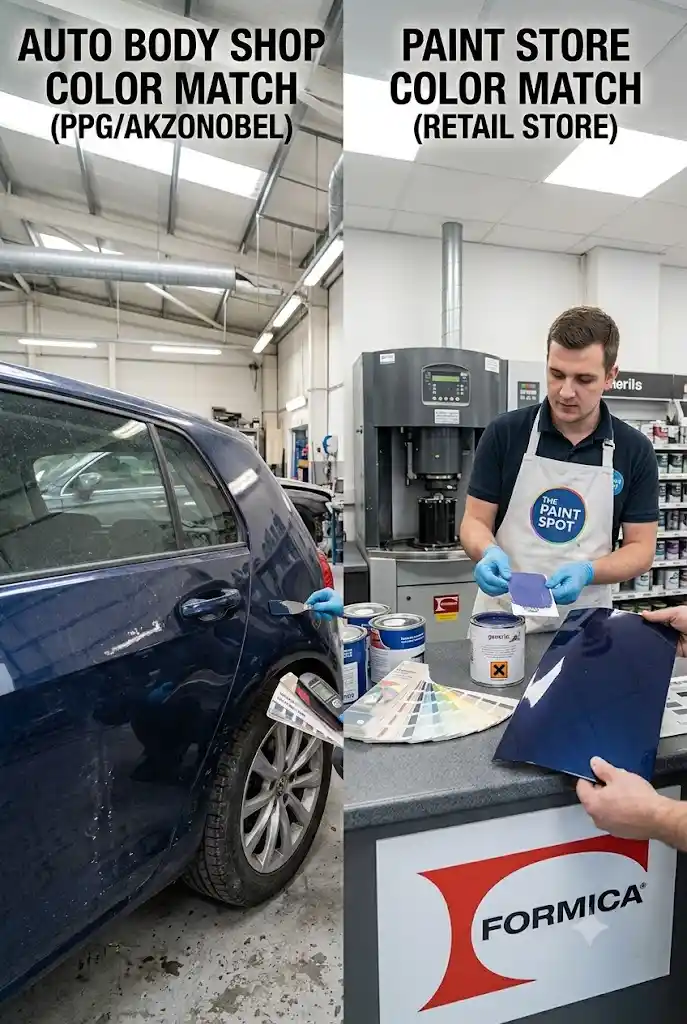
A paint store may help match a paint sample, chip, or formula for materials. That can be useful for paint supplies.
An auto body paint matching service focuses on how the repaired area looks on the vehicle after body work, sanding, refinishing, clear coat, and blending.
You may need CollisionFix if your vehicle has:
- a repaired bumper that needs paint
- a panel that was scratched or refinished
- a replacement part that needs color
- a repaired dent that needs finish work
- a bumper or panel that does not blend well
- paint damage after body repair
If you need paint materials only, a paint supplier may be the right place. If you need the vehicle repaired and refinished, an auto body repair shop is the better fit.
Why a Paint Code Alone Is Not Enough
Your vehicle has a factory paint code. This code identifies the original color formula.
But the paint on your vehicle may not look exactly like it did when it was new.
Paint can change because of:
- sun exposure
- age
- oxidation
- clear coat wear
- previous repairs
- washing habits
- weather exposure
- metallic or pearl paint movement
- plastic and metal surface differences
That means the paint code is the starting point, not the full answer.
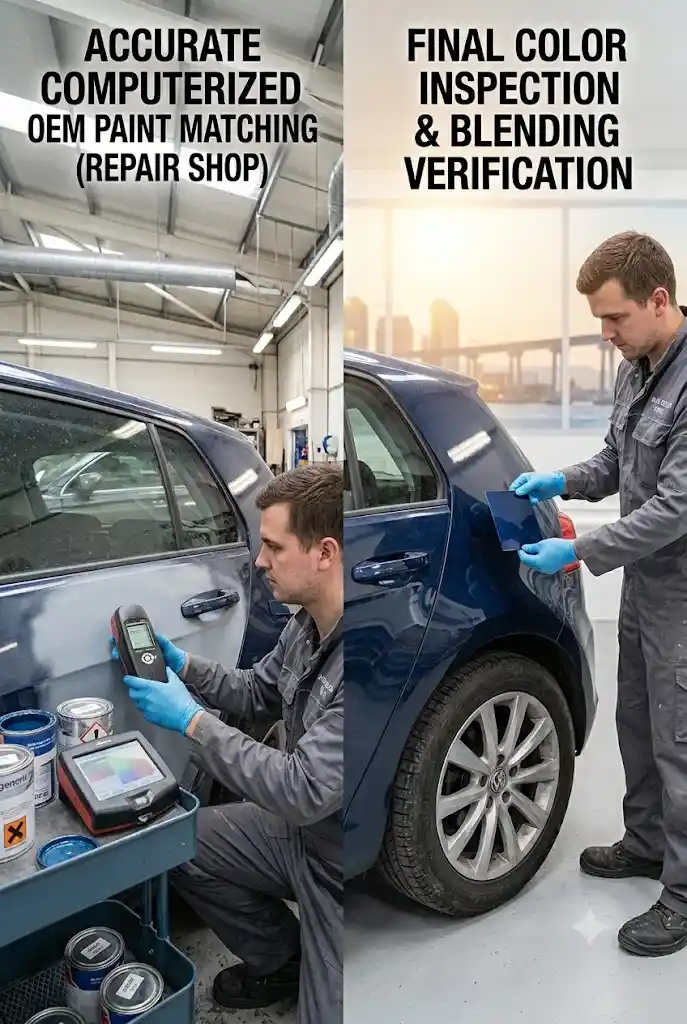
A cleaner paint match considers both the factory color information and the vehicle’s current finish.
Auto Paint Matching in San Diego After Repairs
Paint matching is often needed after a visible painted area is repaired.
You may need auto paint matching in San Diego after:
- auto paint repair
- scratch repair
- bumper repair
- dent repair
- panel repair
- door repair
- fender repair
- hood repair
- quarter panel repair
- collision-related refinishing
If the main issue is damaged paint, start with our auto paint page. If the main concern is whether the repaired area will blend with the rest of the vehicle, this paint matching page is the better fit.
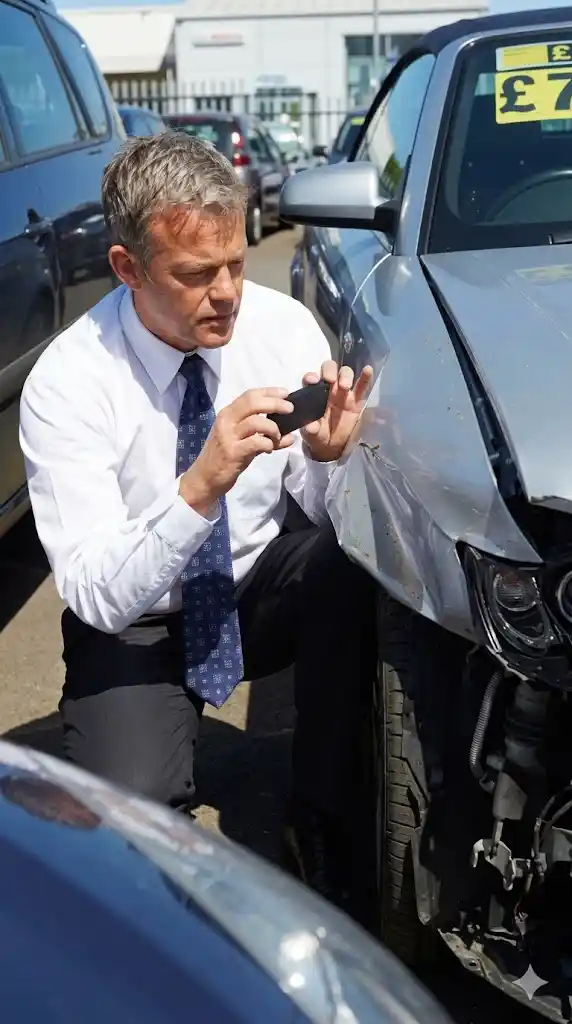
What Makes Paint Matching Difficult?
Some colors are harder to match than others.
White, black, silver, red, pearl, metallic, and tri-coat finishes can show differences more easily. A color may look close in shade but different in direct sunlight.
Paint matching can be affected by:
- paint code variation
- metallic flake direction
- pearl effect
- sun fading
- panel curve
- clear coat depth
- surface texture
- plastic versus metal parts
- previous paint work
- lighting angle
This is why paint matching should be treated as a careful finish process, not a quick color guess.
Bumper Paint Match
A bumper paint match can be more difficult than many drivers expect.
Many bumpers are plastic. Nearby body panels are often metal. Paint can look slightly different on plastic than it does on metal, even when the same color code is used.
Bumper paint matching may matter after:
- bumper repainting
- bumper scratch repair
- cracked bumper repair
- bumper replacement
- rear bumper damage
- front bumper damage
- paint transfer
- plastic bumper refinishing
If the bumper also has cracks, dents, loose tabs, or fitment problems, visit our bumper repair page.
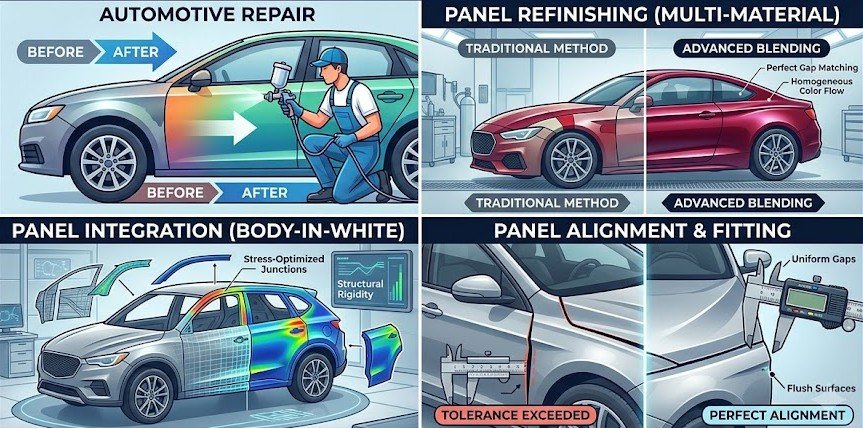
What Is Panel Blending?
Panel blending helps the repaired color transition into nearby paint.
Sometimes painting only the damaged spot can make the repair easier to notice. Blending helps reduce the hard visual line between fresh paint and older surrounding paint.
Panel blending may be considered when:
- the vehicle color has faded
- the repair is on a highly visible panel
- the paint is metallic or pearl
- the repair sits near a body line
- the repaired panel is next to older paint
- the color changes under different lighting
- the repaired area would stand out if painted alone
Blending is one reason paint matching takes judgment, preparation, and finish control.
Clear Coat, Gloss, and Finish Matching
Color is only one part of the match.
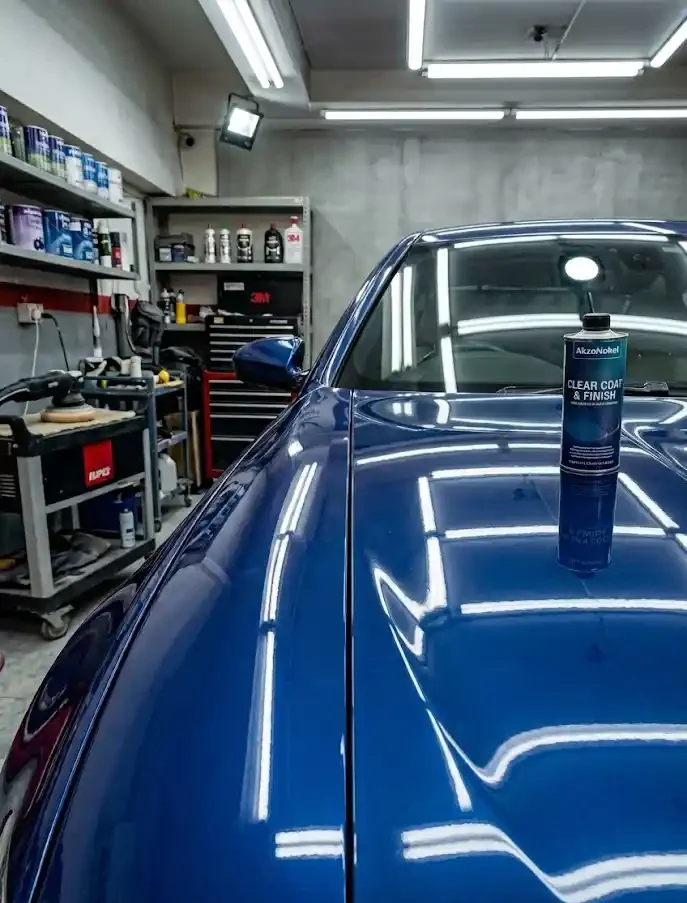
A repaired area can have the right color but still stand out if the clear coat, shine, or texture looks different.
Finish matching may involve:
- clear coat condition
- gloss level
- surface texture
- orange peel texture
- faded or worn areas
- reflection quality
- surrounding panel condition
- polish and finish appearance
The goal is for the repaired area to look natural next to the rest of the vehicle, not just close in color.
Paint Matching vs. Paint Correction
Paint matching is used when new paint or refinishing work must blend with the vehicle’s existing color.
Paint correction usually focuses on improving the existing finish by reducing swirl marks, light defects, oxidation, or surface-level imperfections.
You may need paint matching when:
- a panel is repainted
- a bumper is refinished
- a deep scratch needs paint
- a repaired area needs blending
- a replacement part needs color
You may need paint correction when the paint is mostly intact but looks dull, hazy, or lightly marked.
Factory Paint Match Questions
Many drivers ask if their vehicle can be matched to the factory color.
The factory paint code helps identify the original color. But the vehicle’s current paint may have changed since it was new.
A better question is:
“Can the repair color be matched to how my vehicle looks now?”
CollisionFix uses factory paint information as part of the process while also considering the current finish, panel location, clear coat condition, and blending needs.
When Paint Matching May Be Needed
Paint matching may be needed when a repaired area affects a visible painted surface.
Common examples include:
- a repainted bumper
- a repaired door
- a fender repair
- a hood repair
- a quarter panel repair
- a deep scratch that needs refinishing
- paint damage after dent repair
- paint work after body repair
- a replacement part that needs paint
- a panel next to older or faded paint
If the repaired area is easy to see, paint matching becomes more important.
Paint Matching vs. Auto Paint Repair
Paint matching focuses on color, blending, clear coat appearance, and how the repaired area looks next to nearby panels.
Auto paint repair is broader. It may include touch-up, panel repainting, clear coat repair, refinishing, and finish restoration.
If your main problem is paint damage, visit our auto paint repair page.
If your main concern is color blend after the repair, this paint matching page is the right place.
Paint Matching vs. Scratch Repair
A scratch may or may not need paint matching.
Light clear coat scratches may not need repainting. Deep scratches, keyed panels, and scrapes that remove paint may need refinishing and color blending.
If the scratch itself is the main issue, visit our scratch repair page.
If the scratch repair needs repainting, paint matching becomes part of the finish process.
What Can Cause a Bad Paint Match?
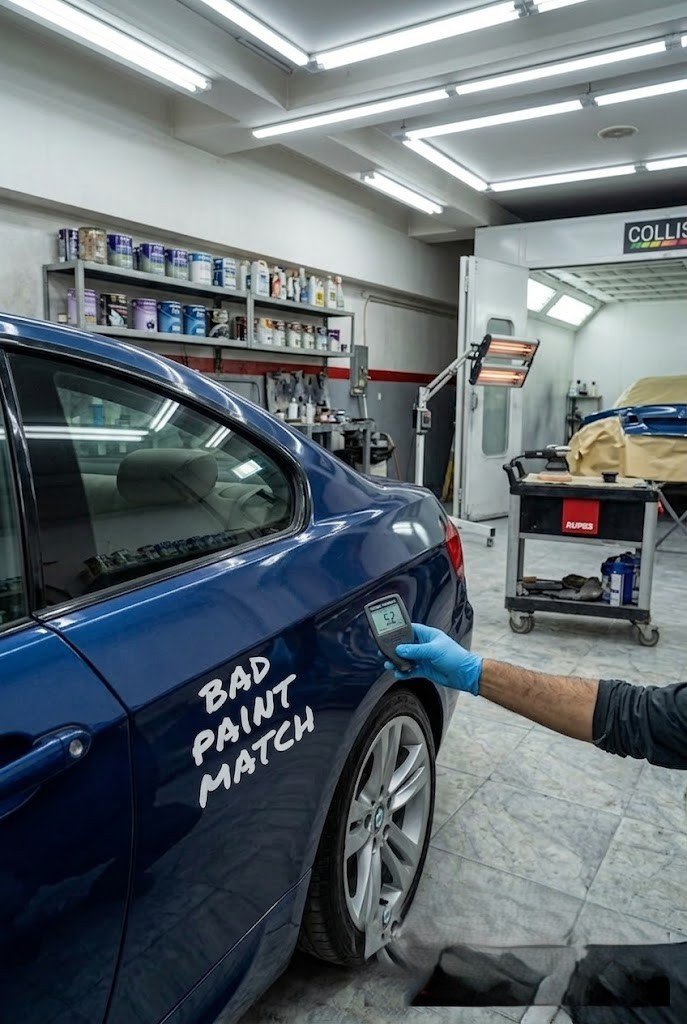
A poor paint match can make a repair stand out, even if the body work is clean.
A bad match may show as:
- a panel that looks too light
- a panel that looks too dark
- a bumper that does not match the fender
- a color that changes in sunlight
- a color that looks different in shade
- uneven metallic flake
- cloudy clear coat
- different shine or texture
- a repair edge that is easy to see
A good paint plan considers color, material, clear coat, light, and blending.
Questions to Ask Before Paint Matching Work
Before approving paint matching or refinishing, ask clear questions.
Useful questions include:
- Is the paint code being used as a starting point?
- Does the current paint look faded?
- Is the damaged part plastic or metal?
- Will the nearby panel need blending?
- Will a clear coat be part of the finish?
- Could the color look different in sunlight?
- Is the repair area large enough to need refinishing?
- Is the paint damage connected to scratch, bumper, or body repair?
These questions help you understand what the finish may need before work begins.
Schedule a Paint Matching Estimate
If your vehicle needs paint repair after a scratch, bumper repair, body repair, or panel repair, CollisionFix can help.
Schedule an estimate today. We will review the damaged area, check the finish, and explain whether paint matching, blending, or refinishing may be needed.
Frequently Asked Questions
Paint matching is the process of choosing and applying a repair color that blends with the vehicle’s current paint finish. It may involve the paint code, color review, panel blending, clear coat, and refinishing.
The paint code is a starting point, but it is not always enough by itself. Sun exposure, age, clear coat condition, and previous repairs can change how the paint looks today.
Panel blending helps the repaired color transition into nearby areas so the paint repair does not stand out sharply from the rest of the vehicle.
Many bumpers are plastic while nearby panels are metal. Paint can appear slightly different on different materials, curves, and angles, even when the same color code is used.
CollisionFix can use factory paint information as part of the repair process, but the repaired color also needs to be compared with the vehicle’s current finish. Age and fading can affect the final appearance.
No. Paint matching helps new paint blend with existing paint. Paint correction usually improves the existing finish by reducing light marks, haze, oxidation, or surface defects.
Sometimes. Light scratches may not need repainting. Deep scratches, keyed damage, or scrapes that remove paint may need paint matching and refinishing.
Sometimes. If bumper repair includes repainting, paint matching helps the repaired bumper blend with the rest of the vehicle.
Older or faded paint can be more difficult to match. The repair may need color adjustment, blending, and finish review to help the repaired area look natural.
Schedule an estimate with CollisionFix. We will review the damaged area, check the finish, and explain whether paint matching, blending, or refinishing may be needed.